
My dear friend, Baroness Jane Fox (OL), organized an extant garment challenge via social media back in November 2022 with the goal of recreating an original garment or accessory.
For reference, here is the description of the challenge and link to the Facebook Group:
This group is dedicated to the Extant Garment Challenge, where participants can recreate an original article of clothing or an accessory from before 1600. Any region and period is acceptable.
While this group is SCA focused, you don’t have to be in the SCA to be in the group.
The challenge starts in November 2022 and will end in Fall 2023. Participants can choose to display or just gather together in Atlantia at October Coronation or November Crown Tournament. I also suggest posting your creations online for everyone to enjoy!
You don’t have to make a close reproduction, simply use the original pieces as inspiration and then recreate them within your budget, ability, and taste.
Please share your ideas and assist others!
I have created a Pinterest board for ideas and will try to make it so anyone can post in it. https://www.pinterest.com/jezandjane/extant-garments-pre-1600/
This challenge is hosted by Baroness Jane Fox, OL, Barony of Tir y Don, Kingdom of Atlantia.
https://www.facebook.com/groups/685674066263768
After visiting Baroness Jane’s Pinterest board I chose to recreate the surcoat of Eleanor of Castile, who lived from 1200-1244.
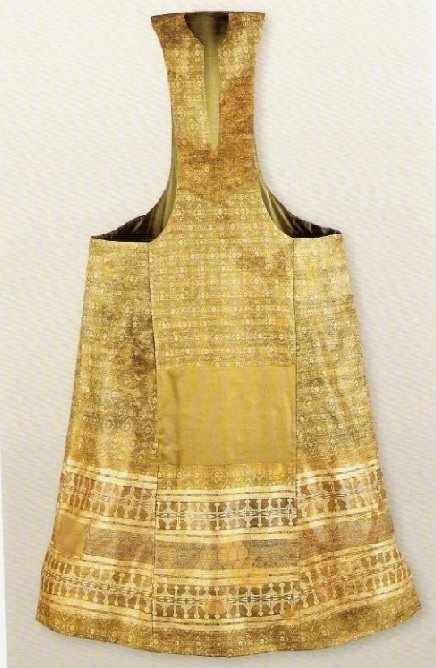
I used the image from the Patrimonio Nacional museum website as my primary visual inspiration, but I also used information and details from other articles, books, and blogs.
After doing some preliminary research on the garment, my first task was to source the fabric that I wanted to use. I was super excited to see that Sartor had a Spanish brocade from the 13-15th centuries for sale in very similar colors to the extant. I bought 5m (16.40 feet) of the fabric, which comes at a width of 74 cm (29.13 inches).
While this fabric would be perfect for the primary pattern I still needed additional fabric or trim for the bottom of the surcoat, as well as a fabric for lining. I did end up purchasing a sari from Etsy, as well as setting aside some other sari fabric that I had left over from my Roman garb in hopes of finding a good match for the pattern at the bottom. For lining I decided to use a beige silk that was also purchased from Sartor.
After my fabric arrived it was time for construction! Lucky for me I live very close to Baroness Jane, who was able to help me with patterning and recreating the surcoat over the course of a weekend.
Our first step was to brainstorm how to pattern the fabric in a way that resembled the extant piece as much as possible. One of the things I found interesting about this garment is how obviously the pattern on the fabric does not line up at the seams. To our modern eye this is quite jarring and unattractive. But seeing this on an extant piece leads me to believe that the priority was conservation of fabric, even when worn by a Queen.
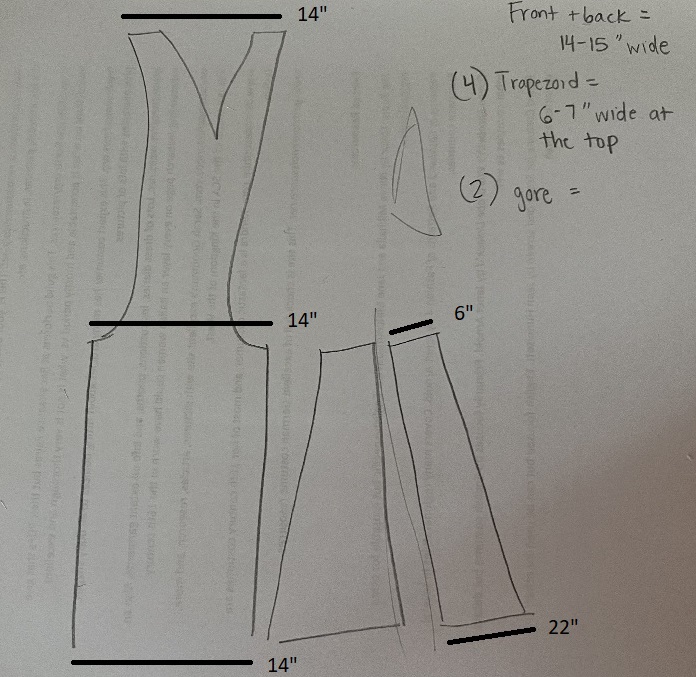
Despite this feature my goal was to have the pattern line up as much as possible. With that in mind, Jane and I brainstormed a variety of pattern possibilities using my hip and shoulder measurements as a starting point. The other measurement we needed to consider was the bottom hem as the kirtle that it would be worn with has a hem of over 200 inches.

The image above shows our brainstorming process, featuring a picture of the extant dress, some sketches in pencil, pins, and three measuring tapes. We also compared the pattern of the extant piece to another common surcoat pattern. That pattern typically features gores, however the extant does not have gores. Instead, it has four – what we referred to as – “trapezoid” shaped pieces – two in the front and two in the back.
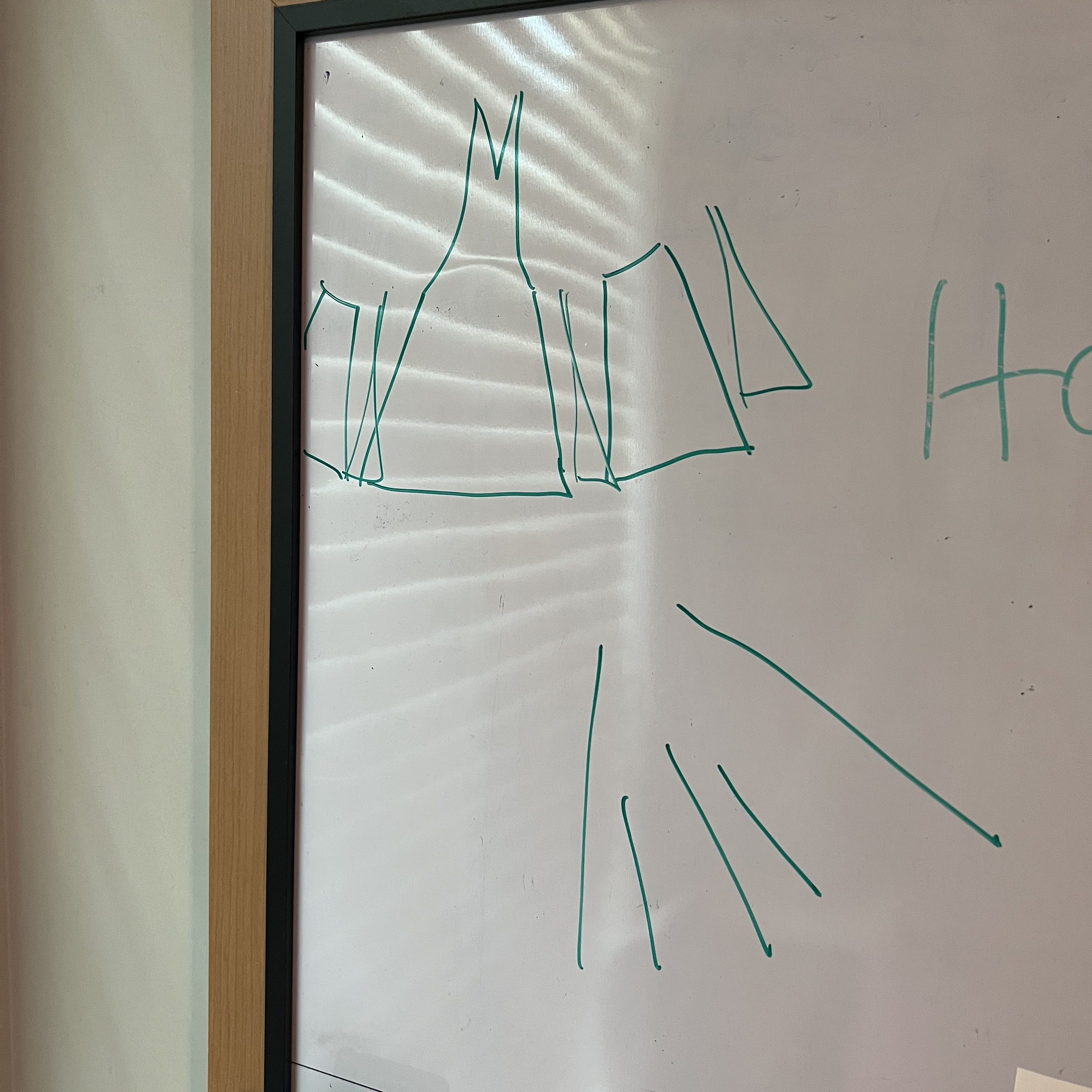

In the end, we did not add any gores. The measurements worked out perfectly so that the bottom hem was wide enough at 116″ to accommodate the underdress.
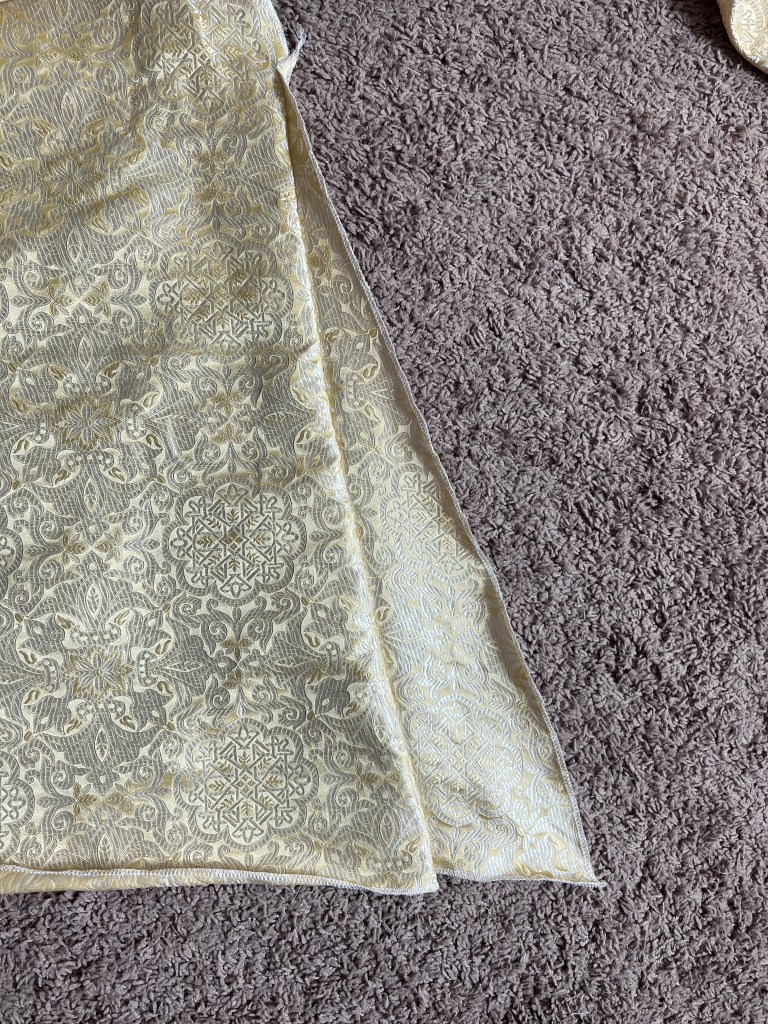
Despite all our efforts to plan the pattern as perfectly as possible mistakes were made! Two of the trapezoids were initially cut the wrong size, while two others were cut with the selvage on the left instead of the right. Luckily we were able to cut and piece the mistakes and fix the pattern!
The last step of patterning was shaping the neckline and side openings to match the extant garment.

We didn’t take any measurements of this process. Instead, we more or less eyeballed the look we wanted by trying the surcoat on over the kirtle and shaping it to match the neckline and emphasize the bust and waist.

After we achieved the final shape we added a bag lining (aka the bagging method) to the top of the surcoat and a hem facing to the bottom in the beige silk that I mentioned earlier.

I’m very happy with how this turned out in the end – it’s a beautiful surcoat! I am still considering whether or not to add trim to the bottom to make it more like the extant piece. I’ll be pulling out my sari fabric soon to do some comparisons in order to visualize the final potential product. What do you think? Should I add trim or leave it as is? Let me know your thoughts in the comments!
 Baroness Margaret Lad, OP